|
|
|
|



|
|
HISTORY OF ST. PATRICK'S CATHOLIC CHURCH - LEE TOWNSHIP |

|
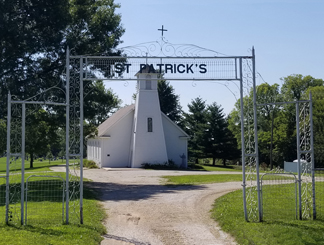
In 1956, Father John Hart authored The History of the Irish Settlement in which he relates that St. Patrick’s Church is older than any Catholic parish in Des Moines and in the early days served as a focal point for all Catholics in south central Iowa. The first log church at St. Patrick’s was built in 1852, on 40 acres of land in the southeast quarter of section 32 of Lee township, the land accommodating both the church and it's cemetery to the south. By the year 1868, the original log church had been outgrown, and it was decided that a larger frame church should be built at the Irish Settlement. This new church was built under the direction of Father Brazill, as he still had St. Patrick’s as a mission. This church still stands and is in use at the present time. |
St. Patrick's Catholic Church |
||||||
|
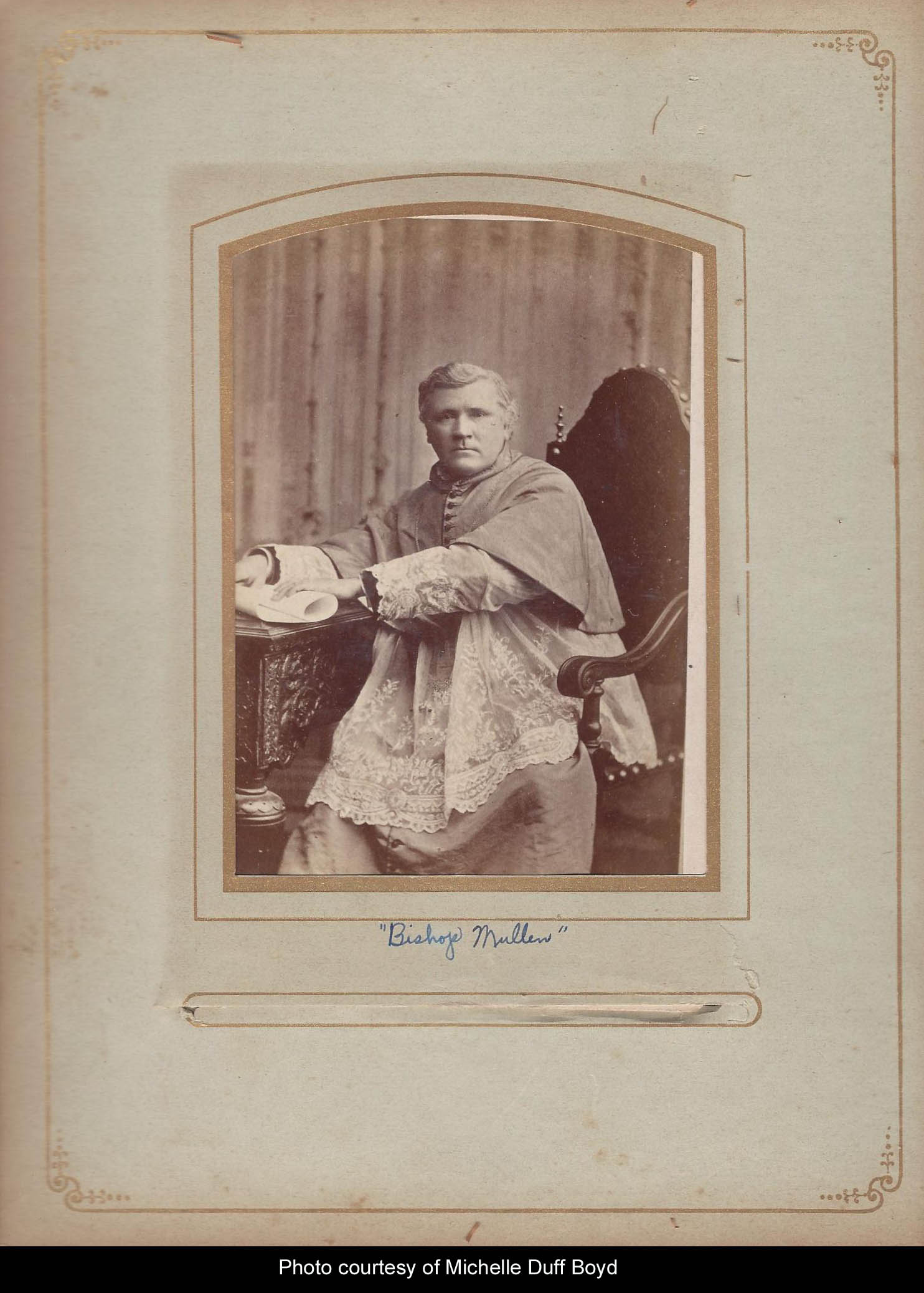
The first priest to serve St. Patrick's was Father Timothy N. Mullen who was assigned the area from Des Moines to Council Bluffs with St. Patrick's as his base. At the outset, the assigned priests handled several parishes and services occurred once a month. It was not until 1872 that a priest was assigned full time to St. Patrick's parish. During the early years, the parish enjoyed rapid growth. From February 1874 to June of 1875, Father Patrick Smith baptized 47 infants, and witnessed eight weddings. Early in 1877, Rev. Michael Rice was sent to the Irish Settlement, and for the next seven years remained as pastor as he consecrated a total of 324 baptisms.
Some of the men of St. Patrick’s parish, from the earliest times, dedicated themselves to the Priesthood. including Father Daniel Mulvhill, Msgr. Henry Malone, Father J. C. White, and Father John Weill.
Young women who left the parish to enter religious life include: Cecilia Durigan, who took the name of Sister M. Victoria; Mary A. Crogan took the name of Sister M. Kiernan; Mary Kiernan took the name of Sister M. Juanita in the order of St. Francis at LaCrosse, Wisconsin; Ann Connor took the name of Sister M. Benedict in the order of St. Benedict in Guthrie, Oklahoma; Agnes Caffery took the name of Sister M. Aquinas with the Sisters of St. Joseph at LaGrange, Illinois; Theresa Cain took the name of Sister M. Angele with Ursuline Sisters of St. Louis, Missouri; Catherine Connor became Sister M. Alberta and joined her aunt in the Order of St. Benedict; Josephine Dooley took the name of Sister M. Sheila with the order of St. Francis of Clinton, Iowa; two sisters, Sheila and Susanne Mulvhill have entered the Sisters of Charity and taken the names of Sister M. James Catherine and Sister M. Susan.
As of 1956, approximately 40 families made up the St. Patrick’s congregation, about 85 percent of whom can trace their ancestry back to the early settlers. Some families are still on the farms first claimed by great grandparents.
For an in depth account of assignments of clergy and some interesting anecdotes about the early church and the Irish Settlement, see the link History of the Irish Settlement at the top of this page. __________________
|
|||||||
| Maintained by the County Coordinator |
This
page was created on December 10, 2010. This page was last updated Monday, 27-Feb-2023 21:10:48 CST . |